If there’s one thing every business in Hong Kong understands, it’s that space comes at a premium. With Grade A office rents in Central still among the highest in the world (around HK$90–110 per sq ft/month, and roughly HK$27–75 in fringe districts like Quarry Bay, Kwun Tong and Sheung Wan), every square foot of your small office in Hong Kong has to earn its place. So whether you’re fitting out your first office, downsizing after going hybrid, or simply trying to get more from your current workspace, the question is the same: how do we make a small office feel bigger and work better?
Written by Roky Design — a Hong Kong office design and build company with hands-on experience delivering office renovation and workplace design projects across Hong Kong, from Central and Admiralty to Kowloon East.
The short answer: a small office feels bigger when you plan the layout around how people actually work, replace solid walls with glass partitions, keep the window line open for natural light, build in concealed storage, and choose slim, flexible furniture. In our office interior design and fit-out projects across Hong Kong, square footage matters far less than how that footage is planned — some of the most productive offices we’ve delivered are under 3,000 sq ft.
Here are nine small office design ideas we use to help Hong Kong SMEs make every square foot count.
| Quick wins for a small office | Why it works |
|---|---|
| Plan the layout before buying furniture | Avoids wasted circulation space |
| Glass partitions instead of solid walls | Light + sightlines = feels larger |
| Open the window line | Daylight reaches the whole floor |
| Built-in / concealed storage | Removes clutter, calmer space |
| Slim, modular, movable furniture | Flexes as the team grows |
| Phone booths over big boardrooms | Matches hybrid / video-call habits |
1. Start with the office layout, not the furniture
One of the biggest mistakes we see in office renovation projects is trying to fit furniture into a space before understanding how people actually work. Before choosing desks or finishes, our space planners always ask a few simple questions:
- How many people are in the office on a typical day?
- Which teams need to sit together?
- How often are meeting rooms actually used?
- Do people spend more time collaborating or focusing individually?
- Is the business likely to grow in the next two or three years?
A good office space plan solves problems before they appear. Sometimes clients think they need a larger office, but once the space is planned properly they realise they already have enough room. Want to see how a full project comes together? Our office fit-out and renovation process walks through every stage, from design to handover.
2. How much office space do you actually need in Hong Kong?
Workplace density has changed dramatically. Pre-2020, the rule of thumb was about 225 sq ft per employee; in 2026, hybrid work and desk-sharing have pushed the average down to roughly 100–150 sq ft per person. Our guide to workplace design in Hong Kong covers the hybrid ratios and change-management side of those numbers. Use this as a planning guide for your Hong Kong office:
| Office style | Space per person | Typical for |
|---|---|---|
| High-density / hybrid | 100–150 sq ft | Tech, creative, start-ups (with desk-sharing) |
| Standard | 150–250 sq ft | Most SMEs — mix of desks, meeting rooms, breakout |
| Low-density / executive | 250–500 sq ft | Law, finance, firms with many private offices |
With over 60% of companies now running desk-sharing ratios above 1.5:1, many Hong Kong SMEs comfortably fit in 300–1,500 sq ft. The goal isn’t to cram in desks — it’s to right-size the space to how your team really uses it. For budgeting, see our Hong Kong office renovation cost guide (2026).
3. Rethink private offices in a small workplace
A decade ago, offices full of enclosed rooms were the norm. Today, too many solid walls quickly make a compact space feel cramped and disconnected. We’re seeing more Hong Kong companies embrace open workstations, shared spaces and smaller meeting rooms — managers don’t always need a private office, and teams often benefit from sitting closer together. That doesn’t mean giving up privacy; it means using space more intentionally through smart office space planning.
4. Use glass partitions to make a small office feel bigger
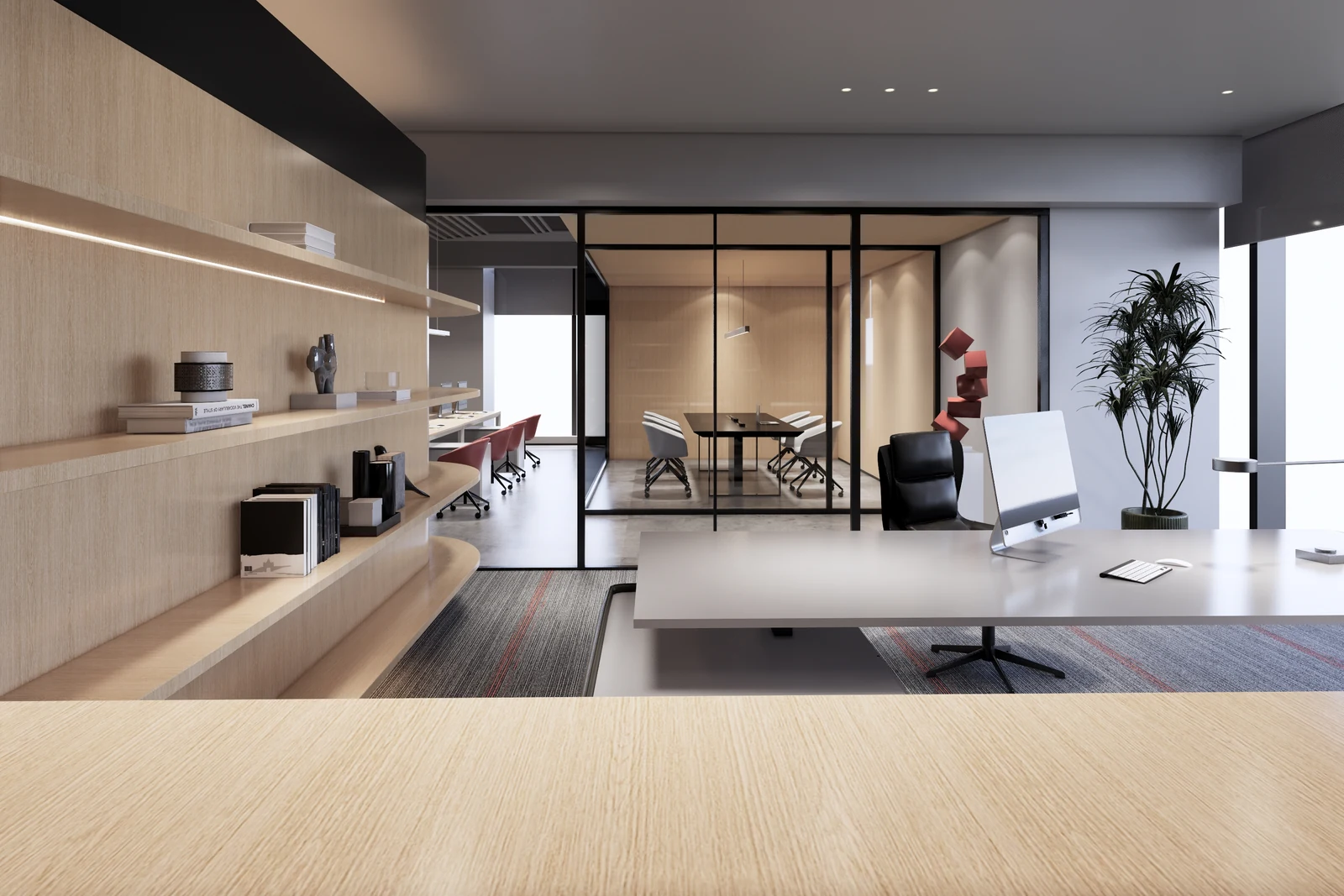
If one design element consistently makes compact offices feel larger, it’s glass. Replacing solid partitions with glass meeting rooms lets daylight travel through the space and keeps sightlines open. The square footage doesn’t change, but the office immediately feels brighter and more spacious — people notice it the moment they walk in. Across our office fit-out projects in Hong Kong, glass partitions are one of the first things we recommend. Browse real examples in our project portfolio.
5. Make every space work harder
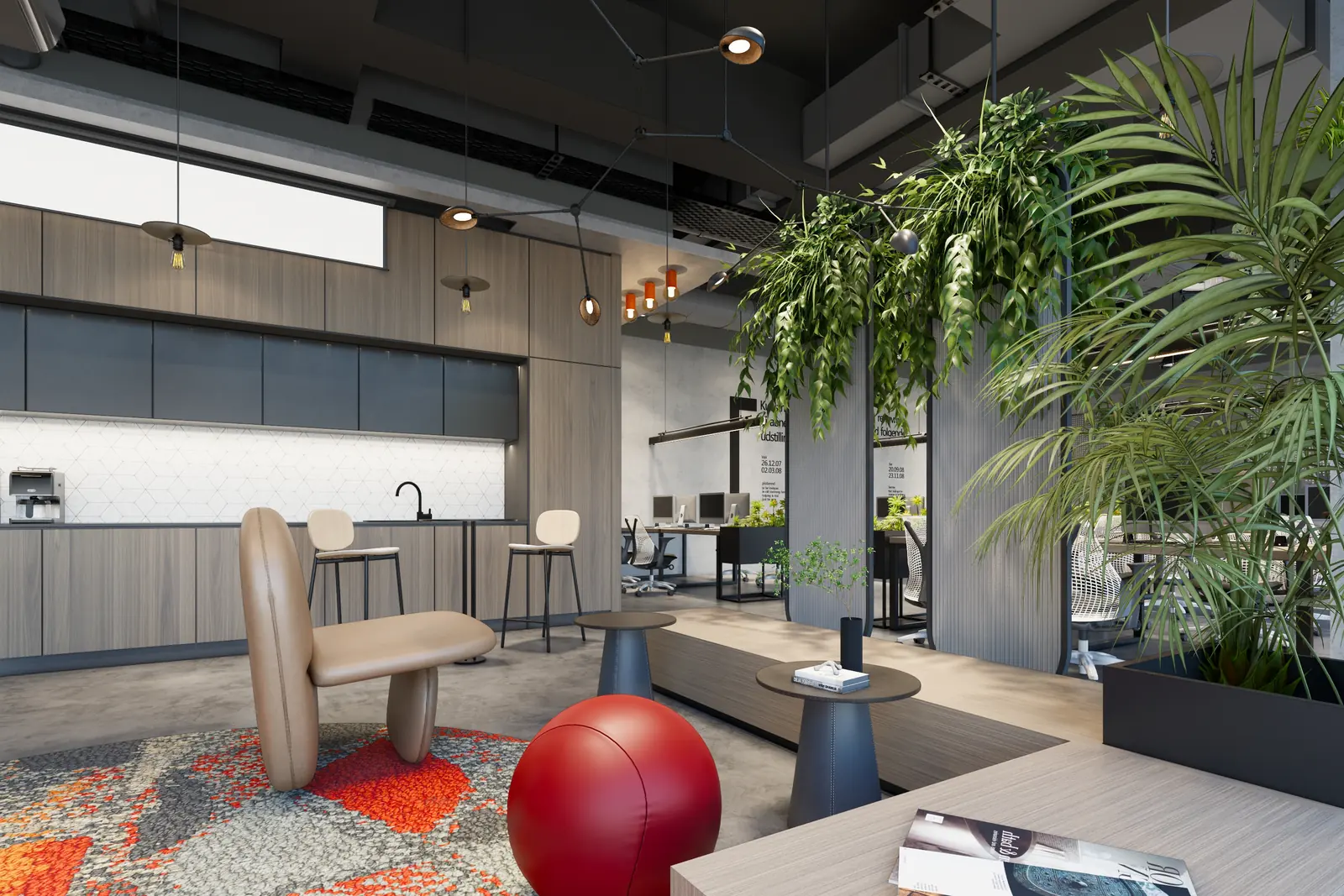
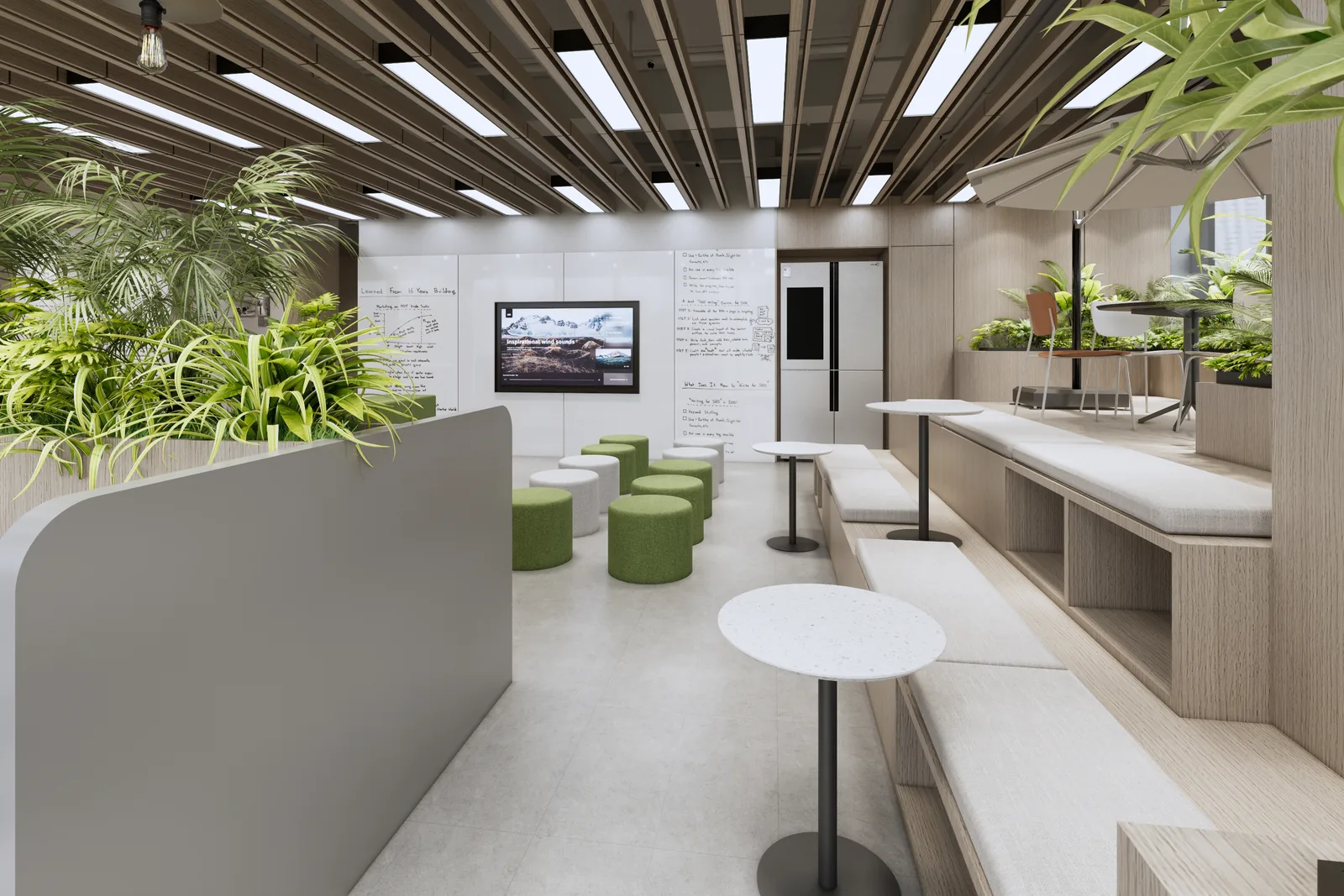
In a small office, no room should sit empty most of the day. A meeting room used once a week isn’t earning its floor area. Design for flexibility instead: pantries that double as breakout spaces, training rooms that host company events, reception areas that become informal meeting spots. The most successful workplaces aren’t filled with rooms — they’re filled with spaces that adapt. This kind of multi-use planning reflects the latest office design trends we apply for Hong Kong clients.
6. Maximise natural light
We’ve all been in offices that feel dark even with big windows nearby. Usually the problem isn’t a lack of daylight — it’s the arrangement. Placing enclosed rooms along the windows blocks light from reaching everyone else. Wherever possible we keep the perimeter open and let shared work areas benefit from daylight. Combined with light finishes and transparent partitions, even a small commercial office feels surprisingly airy — and natural light simply makes people feel better, too.
7. Build in smart storage
Storage rarely comes up at the start of a project, but it becomes critical the moment people move in. Without enough of it, paperwork piles up and the office feels messy. Built-in cabinets and concealed joinery make a huge difference in compact workplaces — when everything has a place, the space feels calmer and more organised.
8. Choose space-saving office furniture
It’s tempting to assume bigger desks or oversized sofas look more impressive, but in a compact space furniture should fit the room, not dominate it. Slim workstations, modular pieces, metal-leg desks (which feel visually lighter) and movable tables offer far more flexibility and let the office evolve as the team grows. Often, less really is more.
9. Swap big boardrooms for phone booths and focus pods
Hybrid work has taught us that people spend far more time on video calls than they used to — but that doesn’t mean you need more meeting rooms. Many clients are reducing the number and size of traditional boardrooms and adding phone booths or focus pods instead. They’re perfect for Teams calls, private conversations and concentrated work, and they take up a fraction of the space.
Design for the way Hong Kong teams work today
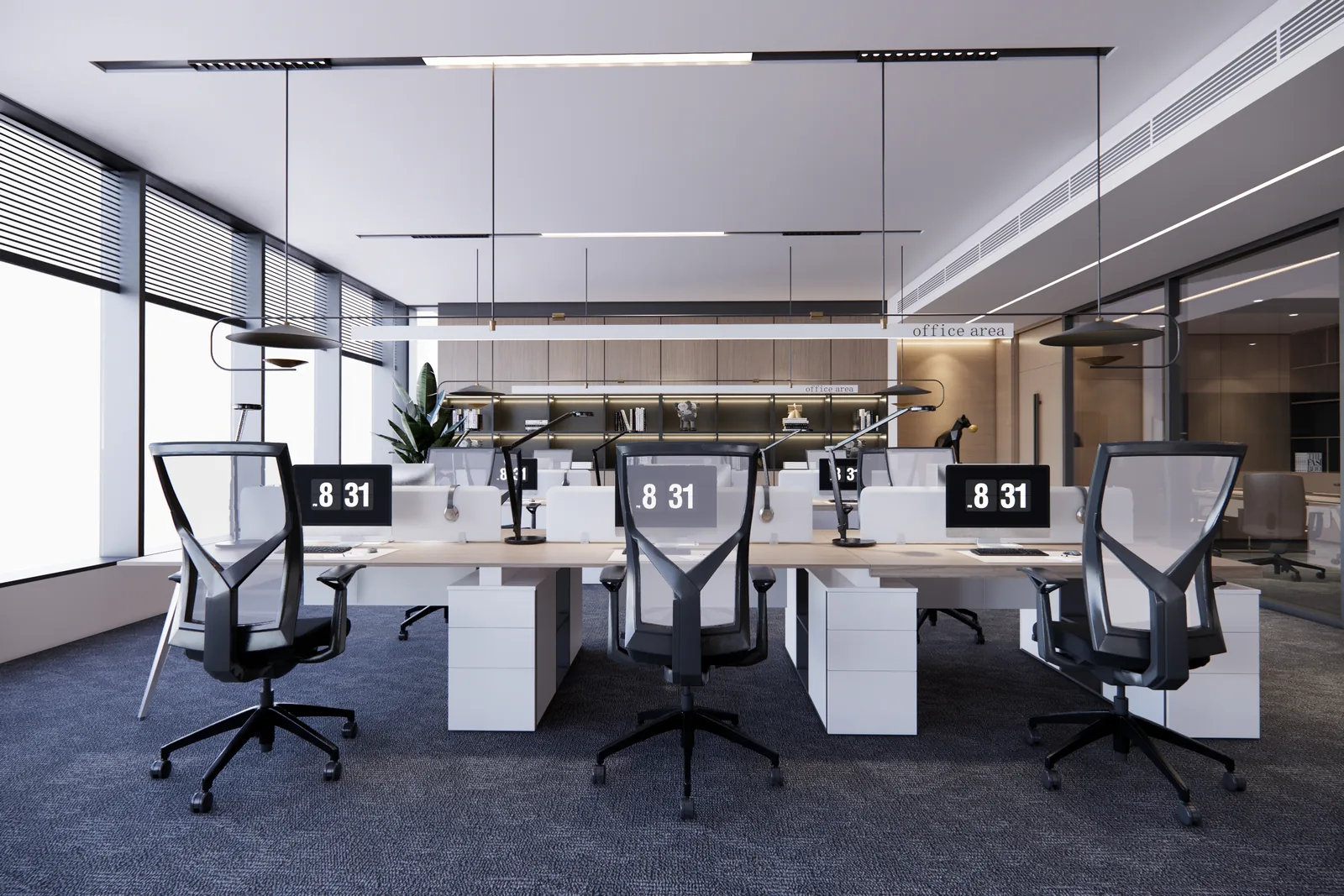
Not everyone comes in five days a week anymore, and businesses use their spaces differently. Instead of rows of assigned desks, companies are creating workplaces built around collaboration, flexibility and connection — shared workstations, touchdown spaces, lounge areas and informal meeting spots. The office has become less about fitting in the most desks and more about creating a place where people want to spend time. Achieving this within Hong Kong’s Grade A buildings — while meeting Buildings Department (BD) and Fire Services Department (FSD) requirements — is exactly where an experienced office design and build partner earns its keep.
A small office doesn’t have to feel small
Our favourite part of designing compact workplaces is the reaction once the project is finished. The comment we hear most often isn’t “this office is beautiful” — it’s “it feels much bigger than I expected.” That’s the goal. Good design isn’t about looking expensive or chasing trends; it’s about helping businesses get more from the space they already have. A well-planned 2,000 sq ft office will always outperform a poorly planned 4,000 sq ft one.
Frequently asked questions
How much office space do I need for a small team in Hong Kong?
As a 2026 guide, allow roughly 100–150 sq ft per person for a hybrid/high-density office and 150–250 sq ft for a standard setup. Many Hong Kong SMEs fit comfortably in 300–1,500 sq ft, especially with desk-sharing.
How do you make a small office look bigger?
Plan the layout around real usage, replace solid walls with glass partitions, keep the window line open for natural light, use light finishes, build in concealed storage, and choose slim, modular furniture. Together these make a compact office feel noticeably more spacious.
Are glass partitions worth it in a small office?
Yes — glass is one of the most cost-effective ways to make a compact office feel larger. It lets daylight travel through the space and keeps sightlines open, so the office feels brighter without changing the square footage.
Do small offices still need meeting rooms?
Usually fewer and smaller than you’d expect. With more video calls, many businesses replace large boardrooms with one flexible meeting room plus phone booths or focus pods, which use far less space.
How much does a small office fit-out cost in Hong Kong?
Standard fit-out runs about HKD 400–600 per sq ft and high-end HKD 600–1,200, depending on specification. See our 2026 Hong Kong office fit-out cost guide for a full breakdown.
Make your compact office work harder
Space will always be valuable in Hong Kong, but a smaller office doesn’t mean compromising on comfort, productivity or employee experience. With thoughtful planning, flexible spaces and a clear understanding of how your team works, a compact workplace can feel just as functional — and often more enjoyable — than a much larger one.
Roky Design is a one-stop office design and build company in Hong Kong, offering fixed, transparent quotes, an 8-week completion guarantee and replies within 1 hour. Whether you’re planning an office renovation, relocating, or rethinking your current space, we’ll help you achieve more with less. Contact us or call +852 8400 1289 for a free consultation and quote.
About Roky Design
This article was written by Roky Design, a Hong Kong office design and build company with experience delivering office renovation and workplace design projects across Hong Kong. As licensed contractors offering a true one-stop, design-and-build service — space planning, 3D design, construction, M&E, BD/FSD statutory submissions and end-of-lease reinstatement — our team has completed 200+ projects for SMEs and corporates in finance, technology, professional services and retail.
- Services: Office interior design, fit-out & renovation, space planning, approvals & permits
- Portfolio: View our completed Hong Kong office projects
- Our team: Meet the Roky Design team
- Address: Tsim Sha Tsui, Kowloon, Hong Kong
- Phone: +852 8400 1289 | Email: [email protected]
Related: Home office design & setup cost in Hong Kong (2026)